
A New North Fort Worth Story Built on Old Texas Ground
Alliance Gateway is one of those North Fort Worth places that can feel brand-new and deeply rooted at the same time. Its broad roads, distribution centers, business campuses, apartment communities, and nearby neighborhoods reflect the modern face of the city. Yet the land beneath them belongs to an older North Texas story—one shaped by ranching, transportation, aviation, and the steady outward growth of Fort Worth.
The neighborhood is generally associated with the area around State Highway 170, Interstate 35W, Heritage Trace Parkway, North Tarrant Parkway, and the industrial and commercial districts surrounding Perot Field Fort Worth Alliance Airport. It sits within the larger AllianceTexas development, a master-planned community that now extends across approximately 27,000 acres in northern Fort Worth and neighboring communities. ([comptroller.texas.gov](https://comptroller.texas.gov/economy/economic-data/ports/2024/alliance.php?utm_source=openai))
For longtime residents, Alliance Gateway is less about one old town square or a single historic building and more about watching a new crossroads take shape.
Why It Is Called Alliance Gateway
The name “Alliance Gateway” comes from the area’s role as an entrance—or gateway—to AllianceTexas. “Alliance” itself refers to the public-private partnership that created the airport and helped organize the surrounding development. The project brought together Hillwood, the City of Fort Worth, and the Federal Aviation Administration in an ambitious effort to create a reliever airport and a major transportation center for North Texas. ([alliancetexas.com](https://www.alliancetexas.com/why-alliancetexas/history?utm_source=openai))
The “gateway” portion is especially fitting. State Highway 170, also known as the Alliance Gateway Freeway, links the Alliance area with Interstate 35W, U.S. 377, and the broader Dallas-Fort Worth transportation network. Heritage Trace Parkway provides another important east-west connection, carrying residents and workers toward schools, shopping, homes, and employment centers.
In other words, the name is not simply a marketing label. It describes the neighborhood’s historic function: Alliance Gateway is a place where roads, rail lines, aircraft, businesses, and people come together.
From Open Land to a Regional Center
The decisive chapter began in 1985, when the FAA began looking for a location for a reliever airport in the North Texas region. The Perot family owned more than 10,000 acres of undeveloped land in Tarrant and Denton counties, making the property a strong candidate for a large-scale aviation and logistics project. ([alliancetexas.com](https://www.alliancetexas.com/why-alliancetexas/history?utm_source=openai))
The first major residential milestone came in 1988, when Hillwood developed Park Glen as the first master-planned residential community within AllianceTexas. Park Glen also became Fort Worth’s first Public Improvement District, an important step in creating the roads, landscaping, services, and amenities that would support future growth. ([alliancetexas.com](https://www.alliancetexas.com/why-alliancetexas/history?utm_source=openai))
Then, on December 14, 1989, Fort Worth Alliance Airport opened. The airport quickly became the anchor of the region. American Airlines broke ground on a major maintenance facility, and aviation-related employment gave the surrounding area a new economic identity.
During the early 1990s, construction of State Highway 170 improved access to the airport and connected Alliance with Dallas Fort Worth International Airport and the rest of the Metroplex. In 1992, the highway opened and the airport’s air-traffic-control tower was completed. That same period also saw the beginning of BNSF Railway’s Alliance Intermodal Facility, which helped establish the area as one of the nation’s best-known inland ports. ([alliancetexas.com](https://www.alliancetexas.com/why-alliancetexas/history?utm_source=openai))
The Streets That Shaped the Neighborhood
A drive through Alliance Gateway tells the story of its development.
- State Highway 170 is the neighborhood’s signature transportation corridor and the source of the “Gateway” identity.
- Interstate 35W connects Alliance Gateway with downtown Fort Worth, Denton, and the larger North Texas freight network.
- Heritage Trace Parkway serves as a major east-west spine through residential, retail, and business districts.
- North Tarrant Parkway connects neighborhoods and employment areas farther east and west.
- FM 156 remains an important north-south route, linking the Alliance area with Haslet and the rural communities that have long bordered Fort Worth.
These roads replaced the slower, quieter landscape of open ranchland with a highly connected urban district. For some residents, that change happened gradually—one subdivision, warehouse, school, or shopping center at a time. For others, it seemed to arrive all at once.
Landmarks of the Alliance Gateway Era
The most important landmark is now known as Perot Field Fort Worth Alliance Airport. In 2022, the airport was renamed in honor of H. Ross Perot Sr., recognizing his role in the vision and development of the Alliance project. The airport’s long runways, cargo operations, maintenance facilities, and corporate aviation activity remain central to the neighborhood’s identity. ([alliancetexas.com](https://www.alliancetexas.com/why-alliancetexas/history?utm_source=openai))
The airport also helped create a local tradition: the Fort Worth Alliance Air Show. First held in 1991, the event brought military and civilian aircraft to the skies above North Fort Worth and became one of the area’s most visible public celebrations. ([alliancetexas.com](https://www.alliancetexas.com/why-alliancetexas/history?utm_source=openai))
Another landmark is the BNSF Alliance Intermodal Facility, which opened in 1994. Its cranes, rail yards, and freight connections may not have the architectural charm of a historic courthouse, but they are a defining part of Alliance Gateway’s heritage. This is where the neighborhood’s modern history becomes visible: containers, locomotives, highways, and airplanes working together.
Nearby Texas Motor Speedway, which opened in 1997, added another major destination. Although the speedway is outside the narrowest interpretation of Alliance Gateway, it belongs to the same wave of North Fort Worth development. Its large events helped introduce thousands of visitors to a part of the city that had once been known mainly for pasture and open land. ([alliancetexas.com](https://www.alliancetexas.com/why-alliancetexas/history?utm_source=openai))
Growth Beyond Industry
Alliance Gateway did not remain only an airport and freight district. In 2000, Hillwood began developing Heritage, a 2,300-acre master-planned community designed as a connected, high-tech neighborhood. Later, Alliance Town Center brought major retail, restaurants, offices, and mixed-use development along Interstate 35W. ([alliancetexas.com](https://www.alliancetexas.com/why-alliancetexas/history?utm_source=openai))
That combination gives the area its particular character. A resident can live near tree-lined subdivision streets, shop at Alliance Town Center, watch aircraft depart Perot Field, and see freight trains moving through the same regional landscape. The neighborhood’s heritage is therefore not frozen in the past; it is expressed through the way different forms of transportation and development continue to overlap.
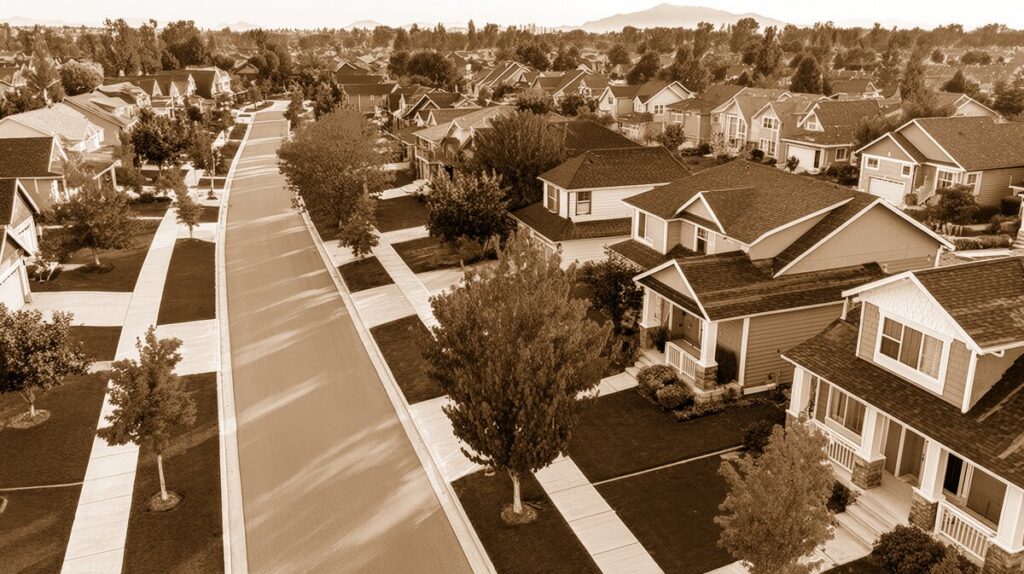
Parks and green spaces also matter. Neighborhood parks, walking trails, landscaped medians, and community recreation areas soften the industrial scale of the district. They provide the everyday setting where families experience Alliance Gateway—not as an economic development project, but as home.
A Neighborhood Still Becoming Itself
Today, Alliance Gateway reflects Fort Worth’s broader transformation into a major logistics, aviation, manufacturing, and technology center. Companies such as FedEx, Amazon, Walmart, Bell, and others have expanded the region’s employment base, while newer investments in advanced manufacturing and mobility technology continue to change the landscape. ([alliancetexas.com](https://www.alliancetexas.com/why-alliancetexas/history?utm_source=openai))
Still, the neighborhood’s most meaningful history is found in ordinary routines: children heading to school along Heritage Trace Parkway, workers commuting before sunrise, planes lifting over the rooftops, and families gathering in parks on warm evenings.
That is what makes Alliance Gateway special. It is a place built for movement, but it has developed a sense of belonging. Its heritage comes from the partnership that created the airport, the roads and railways that opened the region, and the residents who turned a once-open stretch of North Texas into a community with a future—and, increasingly, a story of its own.